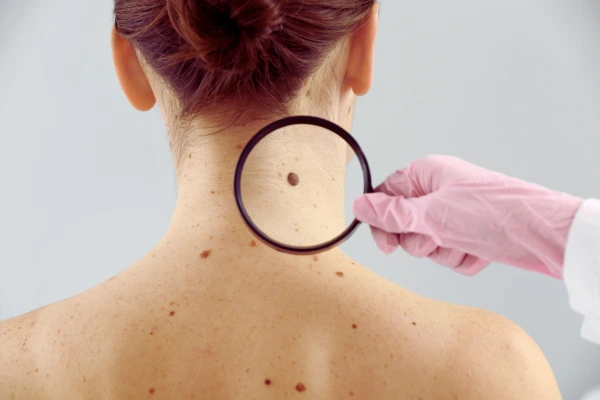
Skin Discoloration and Moles in the Head and Neck Service
When Should You Worry About Changes in Your Skin?
Changes in skin color, texture, or the appearance of moles in the head and neck region are common and often harmless. However, some skin changes—especially new, changing, or irregularly shaped moles or discolored patches—can be early warning signs of skin cancer, including melanoma, basal cell carcinoma, or squamous cell carcinoma. Early recognition and diagnosis are key to successful treatment.
-
Causes of Skin Discoloration and Moles
Skin discoloration and moles can arise from a variety of benign or serious conditions:
Benign Causes:
Freckles or sunspots (solar lentigines): Due to long-term sun exposure.
Seborrheic keratoses: Common non-cancerous skin growths in older adults.
Post-inflammatory hyperpigmentation: Darkening after acne, eczema, or injury.
Birthmarks or congenital moles (nevi): Present from early life.
Concerning Causes:
Actinic Keratosis: A precancerous lesion caused by UV damage; can progress to squamous cell carcinoma.
Basal Cell Carcinoma (BCC): The most common type of skin cancer; often appears as a pearly bump or discolored patch.
Squamous Cell Carcinoma (SCC): May look like a scaly, crusted lesion or sore that doesn't heal.
Melanoma: The most aggressive form of skin cancer; can arise from a mole or appear as a new pigmented lesion.
Sun exposure, fair skin, family history of skin cancer, and immunosuppression are key risk factors for skin cancers in the head and neck region. -
Can Skin Discoloration Be a Sign of Cancer?:
Yes—skin discoloration or changes in moles can sometimes be early signs of skin cancer, particularly if they show suspicious features. It is essential to watch for:
The ABCDEs of Melanoma:
• A – Asymmetry: One half of the mole doesn’t match the other.
• B – Border: Irregular, blurred, or jagged edges.
• C – Color: Multiple colors or uneven shading.
• D – Diameter: Larger than 6 mm (about the size of a pencil eraser).
• E – Evolving: Any change in size, shape, color, or symptoms like bleeding or itching.
Lesions in sun-exposed areas like the face, scalp, ears, and neck are at higher risk for skin cancers. Early detection through regular self-checks and dermatologist evaluation can lead to timely diagnosis and less invasive treatment. -
Conclusion:
Skin discoloration and changing moles in the head and neck region should never be ignored, especially when they appear suddenly or evolve over time. While many are harmless, some may represent early-stage skin cancer, which is highly treatable if caught early. Regular skin self-exams, sun protection, and prompt evaluation of suspicious lesions by a specialist can make all the difference.
Frequently Asked Questions
Book Your Consultation with Dr. Debadeep Bagchi
Taking the first step toward better ear, nose, and throat health is easy! Whether you need a routine ENT check-up, evaluation for sinus or hearing issues, or a consultation for head and neck concerns, we’re here to help.
Make An Appointment Make An AppointmentState Cancer Institute, Gmch top hill road, INDRAPUR, Guwahati, Assam, India, 781034 Guwahati
Mon- Sat : 9.00 Am- 5.00 Pm
